




September 23 2024
Are you tired of cluttering up your rooms with spare clothing that you’re not likely to wear in the near future? Did you know that people normally only wear around 50% of their wardrobe? Wondering how to make getting dressed in the morning easier or looking to preserve special outfits? If so, consider storing your clothes between seasons. Not sure how to go about it? Here’s how to store clothes in a storage unit.
In this guide, you’ll get our expert advice on how to store clothes. We will cover everything including:
- Decluttering
- Cleaning and prepping your clothes
- Preparing and folding
- Choosing the right material
- Packing your clothing
- Where to store clothes
But, how do you get started? Let’s jump in.
How should I prepare my clothes before storage?
Start with a declutter
Before you can start packing away your clothes, it’s always a good idea to start with a clear out. We know it can be difficult to get rid of certain items, especially if they hold sentimental value, but if your wardrobe is bursting with unworn clothes, asking yourself the following questions can go a long way towards deciding which deserves a spot in your wardrobe or storage space:
- Have I worn it in the last 6 months?
- Is it damaged in any way?
- Does it fit and is it comfortable?
If you’ve answered yes to any of the above, it’s probably time to think about making some changes to what you’re keeping. We’ve all been there, kept expensive clothing that doesn’t suit us or those items that are a few sizes too small that we’ll ‘definitely fit into next year’. But, there’s very little point in wasting space keeping items that are itchy, uncomfortable or doesn’t fit, just for the sake of it.
Be strict – after all, the best pieces will not only make you feel great but will also smoothly transition across various seasons and occasions with the right layering and accessories.
Our best advice? Sort your clothing into 3 piles – keep, discard and donate – and be ruthless with what you keep.
Anything in good condition can be taken to a second hand or charity shop, while there are many companies who also offer a free pick-up service if you don’t have access to transport, or have lots of bags to donate. If you are looking to make a bit of money out of your decluttering process, you can also sell anything of value on eBay or other online marketplaces such as Depop or Vinted.

Wash and clean your clothes
The most effective way to store your clothes is by ensuring that they’re clean and as close to new condition as possible. This is because any stains or smells will develop over time, and can cause permanent damage to other clothing. Similarly, you’ll also want to make sure your garments are completely dry as any existing moisture will not only cause your clothes to smell but can also cause mould to grow.
As a general rule of thumb, if your clothes cannot be rectified by washing, it’s probably just best to get rid of those items. If you’re determined to rescue any damaged items, you could also try taking your ‘keep’ pile to the dry cleaners for peace of mind, and to deal with any tough stains.
Don’t forget, you’ll also need to polish and clean any shoes or boots you’re wanting to store. For extra protection against smells, a sprinkle of baking powder will control any unwanted odours, while to ensure no moisture ruins them, you should use a shoe organiser or utilise shoe boxes and bags to keep them in perfect condition.
So, what is the best way to store clothes?
Once you’ve decided what to keep and have cleaned your items for storage, it’s time to figure out how best to pack them away.
How to fold clothes for storage
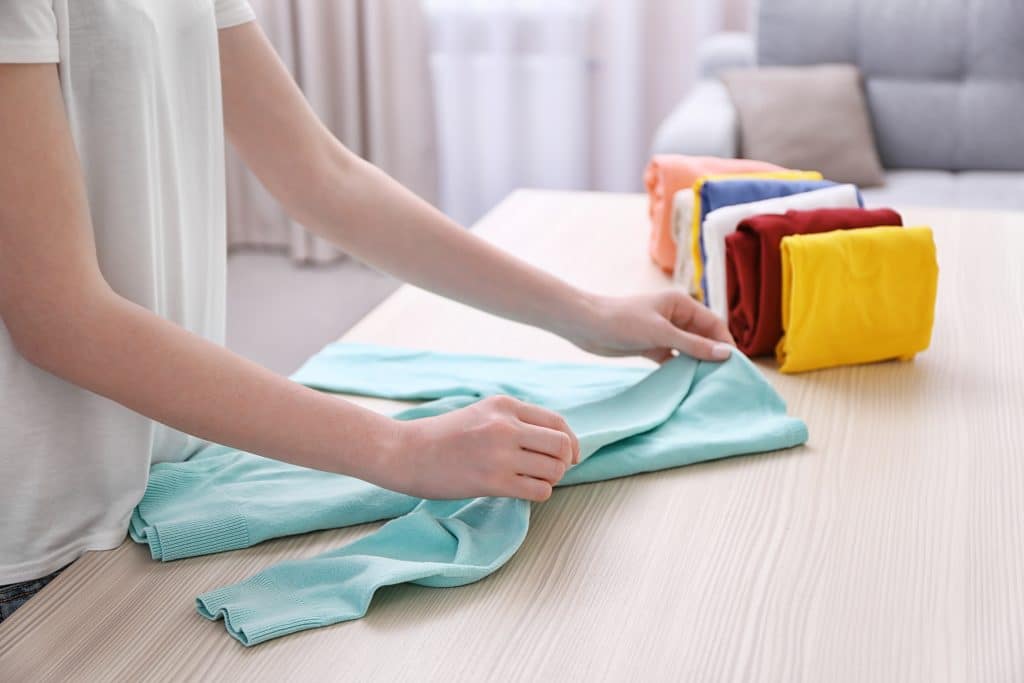
Before you start, you’ll need to get your clothes ready to be packed away. For delicate or expensive items that need to remain hung up, such as when storing your wedding dress or suits, use hangers in cloth garment bags to allow the fabric room to breathe. Avoid plastic versions as the chemicals within the material can seep into your clothes and cause permanent damage.
If it doesn’t need hanging up, it can be folded neatly to maximise space. There are several folding methods you can use when storing clothes, such as:
- KonMari: if you’re a Marie Condo fan, you should already be familiar with this space-saving method that involves folding items into themselves and storing them upright to minimise the space needed for each item. Watch the video below to find out how.
- Army or ranger rolling: a popular way to pack clothes when travelling, decluttering or moving house, rolling your clothes helps to save on space while also preventing wrinkling and creases from forming during storage. This method works by leaving a ‘pouch’ that you can tuck everything into once you’ve rolled up your clothes, which helps to keep everything together and stops your items from unravelling. For example, to roll a long sleeve top first lay it down on a flat surface, such as a table. You’ll then want to fold up about an inch or so at the bottom so it’s inside out and then fold in both sleeves so they lie flat, and fold both sides into the centre to create a neat rectangle. Next, start rolling your top as tightly as you can from the collar downwards, until you can tuck the rolled item into the pouch you made at the start.
- A standard fold: the most used method, a standard flat fold simply involves lying your garment down flat, folding in both sides and then folding the bottom half in – you might need to fold trousers into thirds to make them the same size as your other items.
What materials should I use to pack clothes for storage?
Utilise sturdy plastic boxes to protect your clothes from pests, damp or other contaminants. If you can, stay clear of wood and cardboard, as both contain acids and chemicals that can transfer to your clothes, causing lasting damage. On the other hand, if you can’t get hold of plastic boxes, or your budget doesn’t stretch, lining them with acid-free tissue paper will protect the fabric from any contaminants from the materials.
Similarly, you can also purchase wardrobe boxes online, or even utilise existing suitcases for a cheaper option. While some people would suggest utilising vacuum-sealed bags for clothes storage, this can actually damage your materials and cause moisture to build up within the bag.
How to pack clothes for storage

If using boxes to store your clothes, you’ll want to make sure that you’re packing them correctly in order to maximise space. Start with your heavier clothes at the bottom of the box, such as coats, jackets, knitwear and jeans, and then lighter items such as summer dresses or t-shirts on the top.
Just be careful not to overfill your boxes, not only does this make them much harder to move and increases the chance of them breaking or ripping, but it’ll also make your clothes more wrinkled.
Why should you keep clothes in storage?
When it comes to storing clothes in between seasons, there are many things to consider – you’ll need a dry, cool and dark place that is easily accessible to you. A self storage unit provides this, and more.
How to store clothes in a storage unit
Storing clothes in a storage unit requires proper planning and organisation to prevent damage caused by moisture, pests, and dust.
- Wash all the clothes before storing them to avoid mold and mildew.
- Choose the proper storage containers, such as plastic bins with snap-shut lids or wardrobe boxes with garment bags, to keep clothes safe from humidity and pests.
- Label the containers to quickly find what you need and create an inventory system, such as a color-coordinated inventory or an inventory list, to keep everything organised. We do not recommend vacuum packing clothes, as it leads to permanent creasing and wrinkles and does not allow natural fibers to breathe. Instead, roll clothes to save space, and put heavier clothes at the bottom of containers to prevent creases. Don’t mix fabrics; consider using cedar chips or balls to naturally repel pests.
- Store clothes in a dry, dark, and cool location, and get insurance to protect your investment.
Keeps your clothes safe at Ready Steady Store
Self storage is the ideal solution for keeping your clothes safe, organised, and out of the way, helping you maximise space at home while enjoying complete peace of mind. At Ready Steady Store, we have storage facilities across the UK, including Leeds, Manchester, Lincoln, Northampton, and many more, so you can find a convenient location near you.
We offer a wide range of storage unit sizes to suit every need, with the flexibility to upsize or downsize whenever your requirements change. Not sure how much space you’ll need? Have a look at the quick-reference storage unit size guide below, try our Size Estimator to find the perfect fit and get an instant online quote today.

Storage Unit Size Guide
Quick Reference
9–15
sq ft
Small Storage Unit
Secure storage for documents, boxes and smaller items you need to access occasionally.
25
sq ft
Studio / Small 1-bed
Conveniently fits the contents of a studio or small 1-bedroom flat, without bulky furniture.
⭐ Most popular
50
sq ft
1–2 Bedroom Flat
Reliably fits a sofa, double bed, wardrobe and around 20 boxes - our most-booked size.
75
sq ft
2–3 Bedroom House
Accessible storage for most contents of a family home, including larger furniture pieces.
100
sq ft
3–4 Bedroom House
Friendly, flexible storage for larger homes - white goods, garden furniture and full room sets.
Helpful tip: Most of our storage units are at least 8ft high - stack your items and furniture to make the most of the height and keep your costs down.