




September 23 2024
Packing well isn’t the most glamorous part of using storage. But it makes everything else easier
Most people spend a lot of time thinking about which self storage unit to choose and almost no time thinking about how they’re going to pack. The result is usually a unit that’s technically full but practically unusable – boxes of various sizes wedged in at random, loose items balanced on top of furniture, and no real idea where anything is.
Good packing isn’t complicated, but it does require a bit of thought before you start. The right boxes, the right technique for the right items, a logical system for organising the unit – none of it is difficult, and all of it pays back in time and frustration saved later.
This guide covers everything you need to know about packing for storage, whether you’re moving a single room’s worth of belongings or the contents of an entire house. We’ll go step by step through preparation, the best materials to use, how to handle specific item types, and how to set the unit up so it works for you.
Not sure what size unit you need before you start packing? Our Size Estimator tool takes the guesswork out of it.
Step 1: Before you pack anything, do this

The single most useful thing you can do before packing is decide what’s going into storage and what isn’t. This sounds obvious, but most packing problems start here – people put things in boxes before they’ve made a clear decision about whether those things should be stored, donated, sold, or disposed of. The result is a unit full of things that didn’t need to be there, taking up space and making it harder to find the things that did.
Go through what you’re planning to store and sort it honestly. If something has been sitting unused for two years and you’re not sure why you’re keeping it, storage isn’t the answer it’s just deferring a decision you should make now. Storage is for things you genuinely want to keep but don’t have space for at home right now.
Once you’ve made those decisions, a rough inventory before you start packing is worth the fifteen minutes it takes. A note on your phone or a simple spreadsheet listing what’s going into storage, and roughly where in the unit it’ll end up, will save you a disproportionate amount of time and frustration later particularly if you need to retrieve something specific weeks or months down the line.
A unit that’s been packed with a plan is one you can actually use. A unit that’s been packed in a hurry is one you avoid opening because you can’t find anything and don’t know where to start.
Step 2: Get the right packing materials
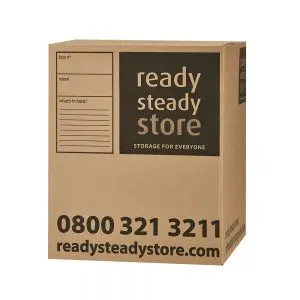
The best boxes for storage are double-walled cardboard removal boxes not the single-wall boxes that supermarkets give away, and not bin bags. Double-walled boxes stack safely, protect contents better, and don’t collapse under the weight of boxes stacked on top. Using a consistent box size wherever possible makes stacking and organising significantly easier.
Ready Steady Store’s box shop stocks the full range of packing materials you’ll need including boxes in multiple sizes, bubble wrap, packing tape, furniture blankets, mattress covers, and more. Buying everything in one place rather than piecing it together from various sources saves time and ensures the materials are properly suited to storage use.
Here’s a quick rundown of what you’ll need:
- Double-walled removal boxes in a standard size the majority of your packing will go in these
- A few larger boxes for lighter items like duvets, pillows, and soft furnishings but be careful not to overfill large boxes with heavy items
- Bubble wrap for fragile items – ceramics, glassware, artwork, electronics
- Packing paper or tissue paper for wrapping individual items before bubble wrap
- Furniture blankets or moving pads for sofas, wooden furniture, and larger items
- Mattress covers if you’re storing beds as dust and moisture get into mattresses quickly without proper protection
- Strong packing tape not masking tape or sellotape, which fail under the weight of stacked boxes
- A permanent marker for labelling clearly, on every side of the box
“People underestimate how much tape they’ll need. And how much bubble wrap. Buy more than you think, because running out halfway through and having to stop is genuinely disruptive.”
Ready Steady Store
Step 3: Pack by item type, not by room

Packing room by room feels logical but often results in boxes that are an awkward mix of heavy and light items, fragile and robust things packed together, and sizes that don’t stack well. Packing by item type all books together, all fragile kitchen items together, all soft furnishings together produces boxes that are consistently weighted, easier to stack, and quicker to unpack when you need something specific.
Books, documents and files
Books are heavy. Pack them in small boxes no larger than a standard wine box and stack them flat rather than spine-down where possible. Documents and files go in clearly labelled archive boxes with lids. Don’t overfill: a box of books that you can’t lift easily is a box that will be dropped.
Clothes and soft furnishings
Clothes store well in wardrobe boxes, which keep them hanging and crease-free, or folded neatly in standard removal boxes. Duvets, pillows, and blankets compress well into vacuum storage bags, which dramatically reduce the space they take up. Use breathable covers rather than plastic bags for anything fabric that will be stored long-term as plastic traps moisture.
Fragile items – China, glassware, ceramics
Wrap each item individually in packing paper first, then bubble wrap. Pack upright where possible glasses and plates are more stable standing than lying flat. Line the bottom and top of the box with bubble wrap or scrunched packing paper. Never leave empty space in a box containing fragile items and fill gaps with packing paper so nothing can move. Mark every side of the box clearly as fragile. Our guide to packing delicate items has more detail on this.
Electronics
Original boxes are ideal for electronics they’re shaped for the item and provide the right amount of protection. If you don’t have original boxes, wrap items in bubble wrap and pack in snug-fitting removal boxes. Remove batteries from everything before storing as batteries can leak and corrode over time. Store screens and monitors upright rather than flat. Keep cables with their device where possible, labelled with tape.
Furniture
Disassemble furniture where you can flat-pack components take up significantly less space and are at less risk of damage in storage. Wrap legs and protruding parts individually in furniture blankets or bubble wrap. Use furniture pads on sofas and upholstered items. Store sofas upright if the unit allows – it frees up floor space and reduces the risk of compression damage to cushions. Our ultimate guide to storing furniture covers the specifics for different furniture types.
Artwork and mirrors
Wrap in acid-free tissue paper first, then bubble wrap. Use corner protectors these are inexpensive and prevent the most common type of damage to framed pieces. Store upright, never flat. Keep away from external walls where temperature variation tends to be greater. Mark boxes clearly on every side.
Mattresses and beds
Invest in a proper mattress cover it’s a small cost that makes a real difference over a long storage period. Store mattresses flat if possible; if you have to store them on their side, check and reposition them periodically to prevent warping. Keep them off the floor on a pallet or base if the unit allows.
The golden rule: every box should be labelled on every side not just the top. When boxes are stacked you can only see the sides, and a box labelled only on top is effectively unlabelled once it’s in the unit.
Step 4: Organise the unit before you start loading

How you load the unit matters as much as how you pack. A few principles that make a genuine difference:
- Heaviest items and boxes go at the bottom and never stack heavy boxes on top of lighter, fragile ones
- Large furniture goes in first, against the back and side walls build the unit from the walls inward
- Leave a walkway down the centre even a narrow one. A unit you can walk into is infinitely more useful than one you can only view from the door
- Items you might need to access during the storage period go near the front seasonal items, anything you might need mid-renovation or mid-move
- Keep boxes of the same size together where possible consistent sizes stack safely and make better use of vertical space
- Use shelving if the unit size makes it practical freestanding shelving units are inexpensive and transform how much you can fit in a unit and how easy it is to navigate
For a more detailed guide to setting up your unit efficiently, our guide to organising a storage unit is worth reading before move-in day.
Step 5: Think about long-term protection
If your belongings are going into storage for more than a few weeks, a few additional steps are worth taking to ensure they come out in the same condition they went in.
Moisture is the main enemy in storage. Clean everything before it goes in soil, food residue, and moisture on surfaces cause damage over time, particularly to fabric items and wood. Let anything that’s been washed or cleaned dry completely before packing. Use silica gel packets in boxes containing electronics, leather items, and anything that’s moisture sensitive. Avoid storing anything damp.
Pests are less common in a well-maintained self storage facility but worth thinking about for long-term storage. Don’t store food of any kind. Clean, soft furnishings and fabric items thoroughly before storing. Cedar blocks in boxes containing fabrics naturally deter moths and are a sensible precaution for long-term clothing storage.
Finally, consider a Contents Protection Plan for anything with meaningful financial or sentimental value. Ready Steady Store’s 24Hr CCTV monitoring and secure access provide strong physical protection, but a Contents Protection Plan provides financial cover on top worth having for items you couldn’t easily replace.
“The thing people most often wish they’d done is labelled better. By the time they need something specific, they’ve forgotten which box it’s in and every box says ‘kitchen misc’. Be specific. It costs nothing.”
Ready Steady Store
Quick answers
What are the best boxes to use for storage?
Double-walled removal boxes in a consistent size are the best choice for storage boxes UK. They stack safely, protect contents better than single-wall boxes, and don’t collapse under weight. Avoid bin bags and supermarket boxes for anything you want to keep in good condition. Ready Steady Store’s box shop stocks the full range.
How do I pack fragile items for storage?
Wrap each item individually in packing paper first, then bubble wrap. Pack upright where possible, fill gaps with packing paper so nothing moves, line the top and bottom of the box with bubble wrap, and mark every side of the box as fragile. Never pack heavy items in the same box as fragile ones.
How do I stop my belongings getting damp in storage?
Clean and dry everything thoroughly before it goes in. Use breathable covers rather than plastic sheeting for fabric items. Silica gel packets in boxes containing electronics or leather reduce moisture absorption. A well-maintained storage facility will have dry, weathertight units if you’re concerned about a specific item, speak to our Customer Service Team.
Should I disassemble furniture before putting it in storage?
Where possible, yes. Disassembled furniture takes up significantly less space, is easier to protect, and is at lower risk of damage. Keep screws and fittings in a labelled bag taped to the relevant piece so nothing gets lost.
How do I find out what size unit I need?
Our Size Estimator tool gives you a clear guide based on what you’re planning to store. If you’d rather talk it through, your local store team will help you get it right.
Ready to get started?
Good packing is one of those things that seems like extra effort at the time and saves you considerably more effort over the weeks and months that follow. The boxes you label properly, the furniture you wrap carefully, the unit you organise logically – all of it means your storage works for you rather than becoming a source of stress every time you need to access it.
Ready Steady Store has everything you need to get it right including the right unit size for what you’re storing, packing materials available in store and online, and a team at every store who’ll help you plan it properly. Find your nearest store and get a quote today or call us free on 0800 321 3211.