



September 23 2024
Stay organised with these smart self storage unit tips, including label systems and stacking strategies. Discover how to use labels effectively and maximise space for stress-free storage.
Moving house? Downsizing? Or maybe you’re just tired of tripping over boxes in the spare room? Whatever your reason, a self storage unit can be a lifesaver but only if it’s organised.
The truth is that a messy storage unit can quickly turn into a nightmare. Imagine opening the door to a mountain of unlabelled boxes and having no idea where your winter clothes or that box of important documents are hiding. The good news? With a clear labelling system and a few smart strategies, you can maximise your storage space and always know exactly where everything is.
In this guide, we’ll share expert tips on how to organise your storage unit like a pro with a special focus on labelling so you can enjoy a stress-free, clutter-free experience.
Why Organising Your Storage Unit Matters
It’s tempting to treat your storage unit like a giant “out of sight, out of mind” closet. But a lack of organisation wastes both time and money. Here’s why staying organised is worth the effort.
- Quick access – No more digging through random boxes to find what you need
- Maximise space – Proper stacking and sorting means you only pay for the space you need
- Protect your belongings – Organised units reduce the risk of damaging items
- Stress-free move – Whether you’re moving in or out, everything is easier to handle
Think of it this way, when your storage is organised, your unit works for you, not against you.
Step 1: Plan Before You Pack
- Before moving a single box, take 30 minutes to create a plan. Trust us, it will save you hours later
- Make an inventory – Write down everything you’re putting into storage. Group similar items like kitchenware, seasonal clothes, tools, books, and keepsakes
- Prioritise access – Need access to your camping gear every summer? Keep it near the front. Holiday decorations? Store those towards the back
- Choose your system – Decide whether you’ll sort by room (kitchen, bedroom), by type (clothes, electronics), or by use (seasonal, everyday)
This planning step is the foundation for an efficient storage layout.
Step 2: Use the Right Packing Materials
Great organisation starts before you even reach the unit. Consistent, sturdy packing supplies make labelling, stacking, and retrieval much easier. Have a look at our online Box Shop.
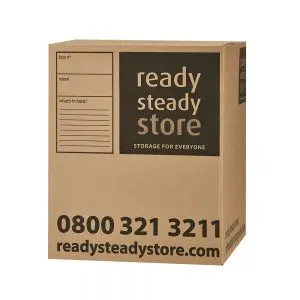
- Boxes – Use strong cardboard and clear plastic boxes with lids
- Labels – Durable, waterproof labels keep things readable long-term
- Markers – Use bold permanent markers, black, red, and blue are perfect
- Packing tape – Strong tape keeps everything secure, especially for long-term storage
Pro tip – Keep extra labels, markers, and tape inside your unit for quick updates.

Step 3: Build a Fool-Proof Labelling System
Labelling is the cornerstone of self storage organisation. Here’s how to do it right.
- Label multiple sides of each box (and the top)
- Be specific, instead of “kitchen,” write “kitchen – mugs & glasses”
- Use colour coding for example, green for the living room, blue for the bedroom
- Number your boxes and keep a master inventory “Box 12 – Winter Jumpers”
- Add handling notes like “Fragile,” “Heavy,” or “This Side Up”
This simple step will save you hours of frustration later.
Step 4: Go Digital for Extra Efficiency
If you want to take your system to the next level, combine physical labels with digital tracking.
- Use inventory apps like Sortly or even a simple Google Sheet
- Create QR codes that link to a list of the box’s contents scan to know exactly what’s inside without opening it
- Save your inventory to the cloud so you can access it anywhere
This is especially handy for small businesses managing stock in storage.

Step 5: Stack Like a Pro
When it’s time to move everything in, follow these stacking strategies.
- Heavy items first – Place sturdy, heavy boxes at the bottom
- Fragile items on top – Keep breakables safe from pressure
- Create aisles – Leave a walkway for easy access if your unit is large
- Use shelving – Keeps boxes off the floor and within reach
- Frequently used items in front – Seasonal or everyday items should be easy to grab
Step 6: Maintain Your System
Organisation isn’t a “set it and forget it” deal. Keep your system working with simple habits.
- Update your inventory whenever you add or remove items
- Stick to your system, no unlabelled boxes allowed
- Reorganise seasonally, especially after holidays or a move
- Keep a small toolkit (scissors, tape, labels, marker) in your unit
Avoid These Common Mistakes
- Leaving boxes unlabelled
- Using messy handwriting on labels
- Stacking boxes too high, it’s unsafe and impractical
- Mixing multiple categories in one box
- Ignoring climate considerations, label items like “keep dry” or “avoid heat”

Final Thoughts
Keeping your self storage unit organised doesn’t have to be hard. With the right labels, smart stacking, and a clear system, you’ll save time, protect your belongings, and reduce stress.
At Ready Steady Store, we offer modern, secure, and flexible units across the UK, including:
- Self Storage Manchester – perfect for students, businesses, and city living
- Self Storage Leeds – ideal for families and professionals in West Yorkshire
- Self Storage Northampton – serving the heart of the Midlands
- Self Storage Wokingham – great for Berkshire and nearby areas
- Self Storage Eastleigh – convenient for personal and business use
With flexible unit sizes, state-of-the-art security, and helpful staff, we make storage simple and stress-free. Find your nearest Ready Steady Store today →
FAQs About Organising a Self Storage Unit
1. What is the best way to organise a self storage unit?
Start by making an inventory, use strong boxes, and create a clear labelling system. Stack heavy items at the bottom, keep fragile items on top, and place frequently used items near the entrance for easy access.

2. How should I label boxes for storage?
Use clear, waterproof labels on at least two sides and the top of each box. Be specific, instead of “kitchen,” write “kitchen – mugs and glasses.” Colour coding and numbering systems make retrieval even easier.
3. How can I maximise a small storage space?
Use sturdy shelving to stack vertically, group similar items together, and leave a small aisle so you can reach items at the back without moving everything around.
4. Are digital tools worth using for storage organisation?
Yes! Apps like Sortly or Google Sheets make tracking your items simple. You can even create QR codes for each box, so you know exactly what’s inside without opening it.
5. How often should I reorganise my storage unit?
Check your unit every few months or after any big life changes like moving house or seasonal cleanouts. Updating your inventory and labels regularly will save time in the long run.